10 min prep · 45 min cook · Serves 3–4 portions · Main
The story
“This was Mickey's Badepapa's favourite dish, made in the house every Tuesday without fail. Badepapa was his grandfather, and his secret was a spoonful of chunky chaat masala folded into the garam masala, giving the chickpeas their extra tang.”
This recipe now belongs to every family who cooks it.
The method
1Rinse the chickpeas and soak in plenty of water for at least 8 hours or overnight.
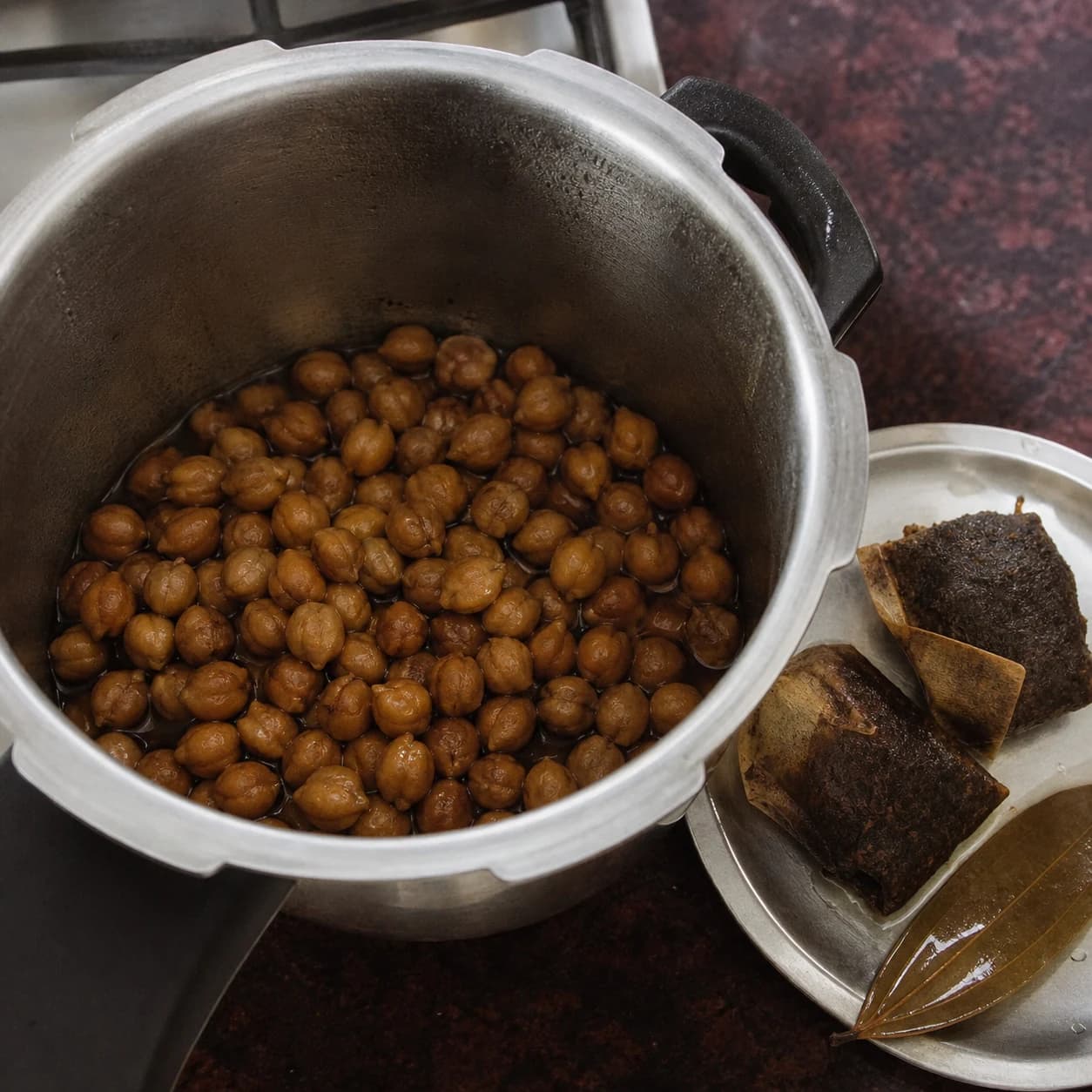
2Drain and rinse the chickpeas. Add to a pressure cooker with fresh water, the black tea bags, baking soda, salt and bay leaf.
3Pressure cook for 5–6 whistles (25–30 minutes), until tender. Discard the tea bags and bay leaf, then drain, reserving about 100ml of the cooking liquid.
4While the chickpeas cook, pan-fry the paneer cubes in a little ghee over medium heat until golden on a couple of sides. Set aside.
5In a heavy-bottomed kadai, heat the ghee or oil over medium heat. Add the cumin seeds and ajwain and let them crackle.
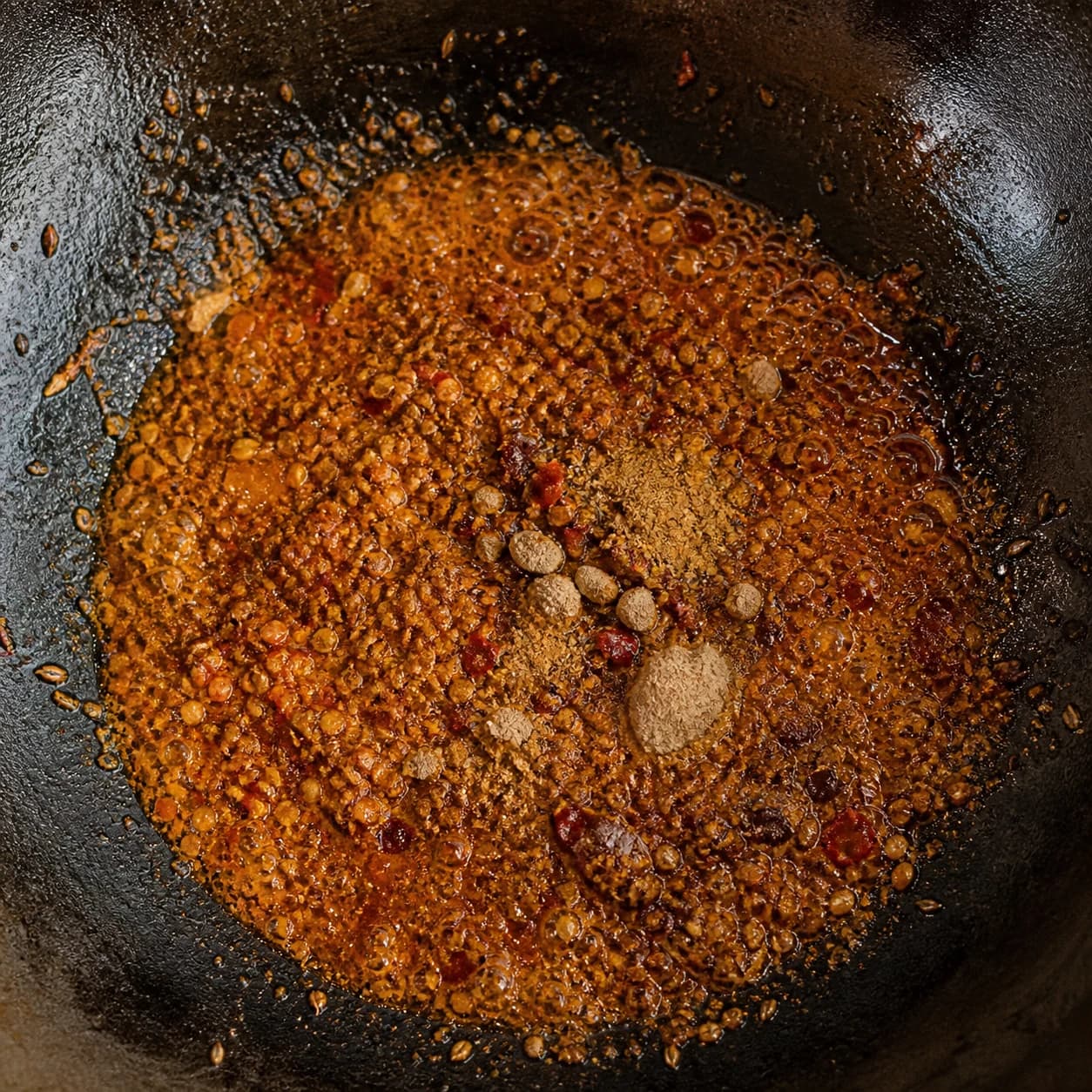
6Reduce the heat to low. Add the crushed anardana, amchur, roasted cumin, coriander powder, Kashmiri chilli, turmeric, chole masala, black salt and chaat masala. Sauté for 15–20 seconds.
7Add the boiled chickpeas and toss thoroughly to coat every piece in the spice blend.
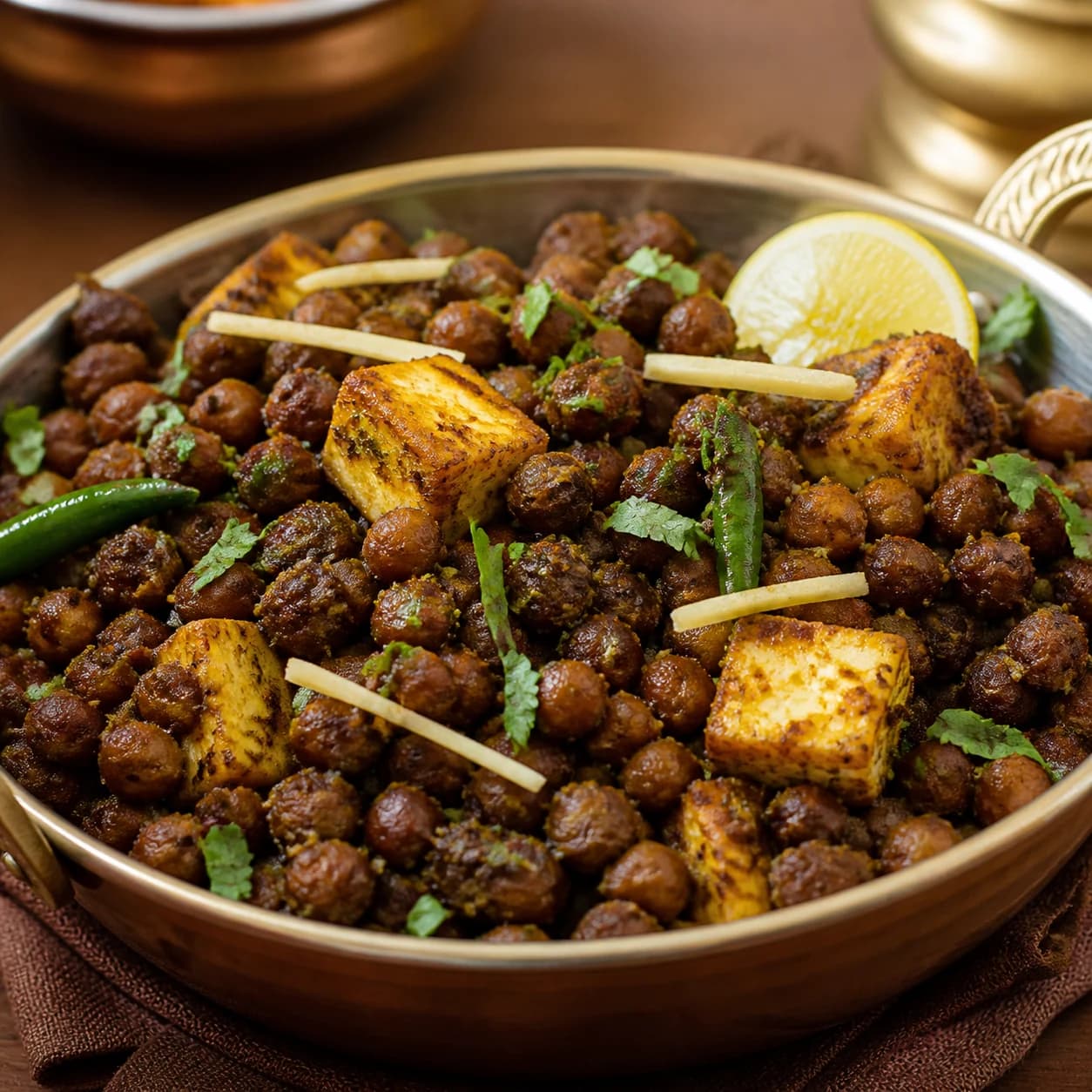
8Pour in the reserved chickpea broth. Fold in the ginger and green chillies, cover, and cook on low for 10–15 minutes, stirring occasionally, until the liquid reduces and the masala clings to the chickpeas. Fold in the seared paneer for the final 5–8 minutes, just long enough to warm through and take on flavour without turning tough.
9Finish with chopped fresh coriander and a squeeze of lemon. Serve hot with bhature or kulcha.
A visual guide
See the key stages
Key moments to look for as you cook. Use these visual cues alongside the written method.
Step 3
Cook until tender and tea-darkened
Pressure-cook the soaked chickpeas with black tea, salt and bay until tender, then remove the tea and reserve about 100ml of the cooking liquid.
Step 6
Bloom the dry spices briefly
Lower the heat before adding the ground spices and Badepapa's chunky chaat masala; 15–20 seconds is enough to release their aroma without scorching them.
Step 9
Finish with a dry, clinging masala
Reduce until the masala coats every chickpea, warm the seared paneer through at the end, then finish with ginger, chilli, coriander and lemon.
Cook's notes & swaps
A little help from the OPR kitchen
These are optional pointers for making the recipe your own while keeping the spirit of the original.
Why black tea?
Boiling the chickpeas with black tea bags is what gives Pindi Cholley its signature dark colour. It is a traditional Rawalpindi technique, not a mistake if your chana comes out looking deep brown-black.
The 8-hour soak isn't optional
Soaking the dried chickpeas overnight is essential for even cooking. Don't skip it, even if you're short on time elsewhere.
For a glossier masala
Lightly mash a spoonful of the boiled chickpeas into the pan while tossing them in the spice blend. It helps the masala thicken and cling to every piece.
Families who've made this
Add your place at the table.
Cooked Badepapa's Pindi Cholley? Share a photo or a few words for the families who make it next. and you could be picked for a future OPR live cook-along. Every post is checked by OPR before it appears here.
Helpful answers
Questions about Badepapa's Pindi Cholley
Why do the chickpeas look almost black?
They're boiled with black tea bags, a traditional Rawalpindi technique that gives Pindi Cholley its signature dark colour.
Can I skip the overnight soak?
It isn't recommended. Soaking the dried chickpeas for at least 8 hours is what allows them to cook evenly and become properly tender.
When should the paneer go in?
Pan-fry it separately until golden, then fold it into the curry for only the final 5–8 minutes of the slow cook. Adding it earlier risks the paneer turning rubbery.
How do you know when Pindi Cholley is ready?
Cook it uncovered until the reserved broth has reduced and the dark masala clings closely to the chickpeas, leaving almost no loose gravy in the kadai.