“I learned this from my Indian mother-in-law and tweaked it a little by replacing the tinned tomatoes with passata for a smoother, richer taste. I have cooked it in India for family and received their seal of approval — as well as my mother-in-law declaring that mine is better than hers now!”
This recipe now belongs to every family who cooks it.
Dave & Rubble
The method
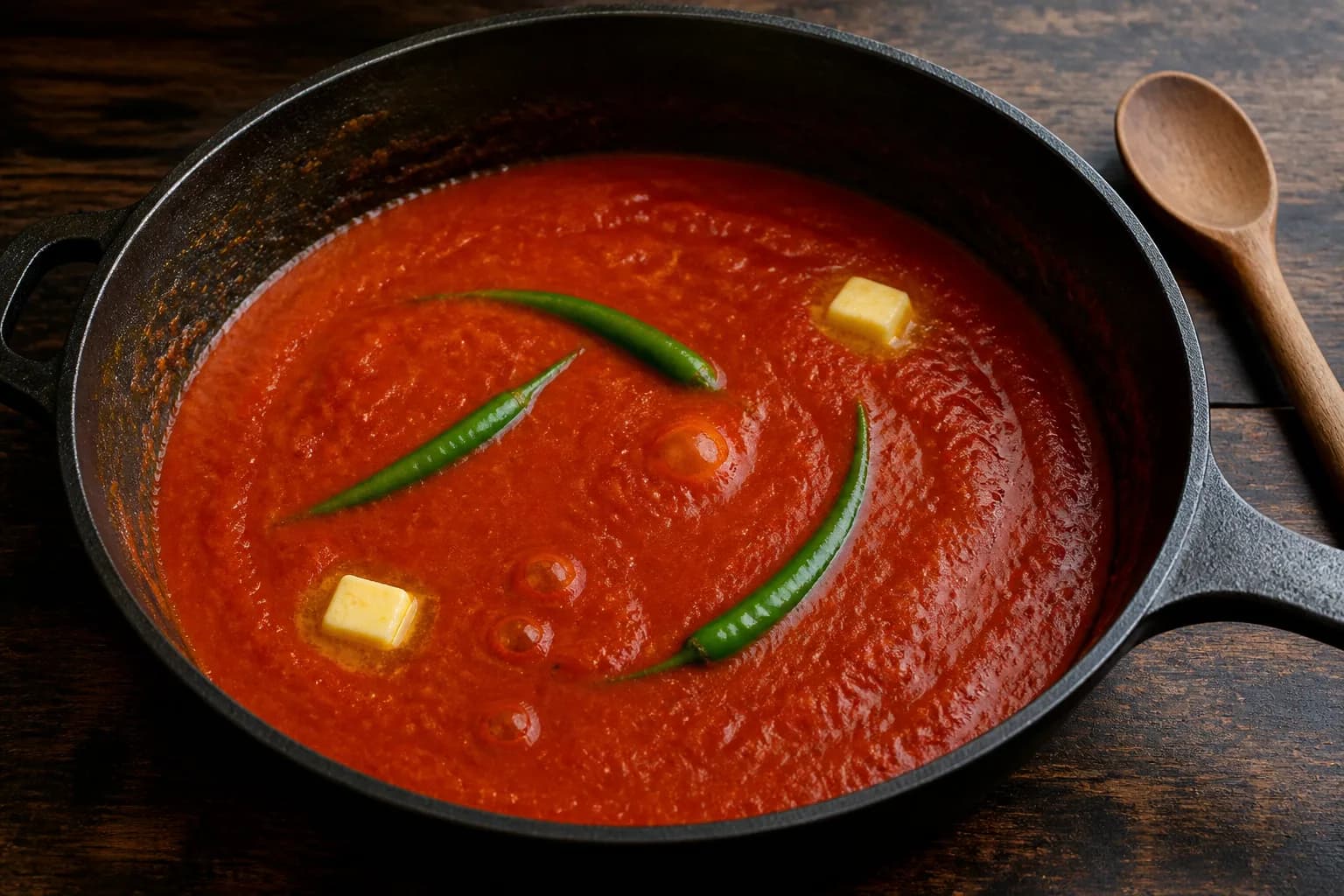
1Pour the passata into a large, heavy-bottomed pan — ideally cast iron. Add half the butter, diced into cubes, along with the sugar and salt.
2Keep the chillies whole, but prick each one several times with the point of a knife so the flavour can escape, then add them to the passata.
3Bring the sauce to the boil, then simmer briskly over a medium heat for 20–25 minutes, using a splash guard rather than a lid. You want the steam to escape and the sauce to reduce, without bubbling or spitting out.
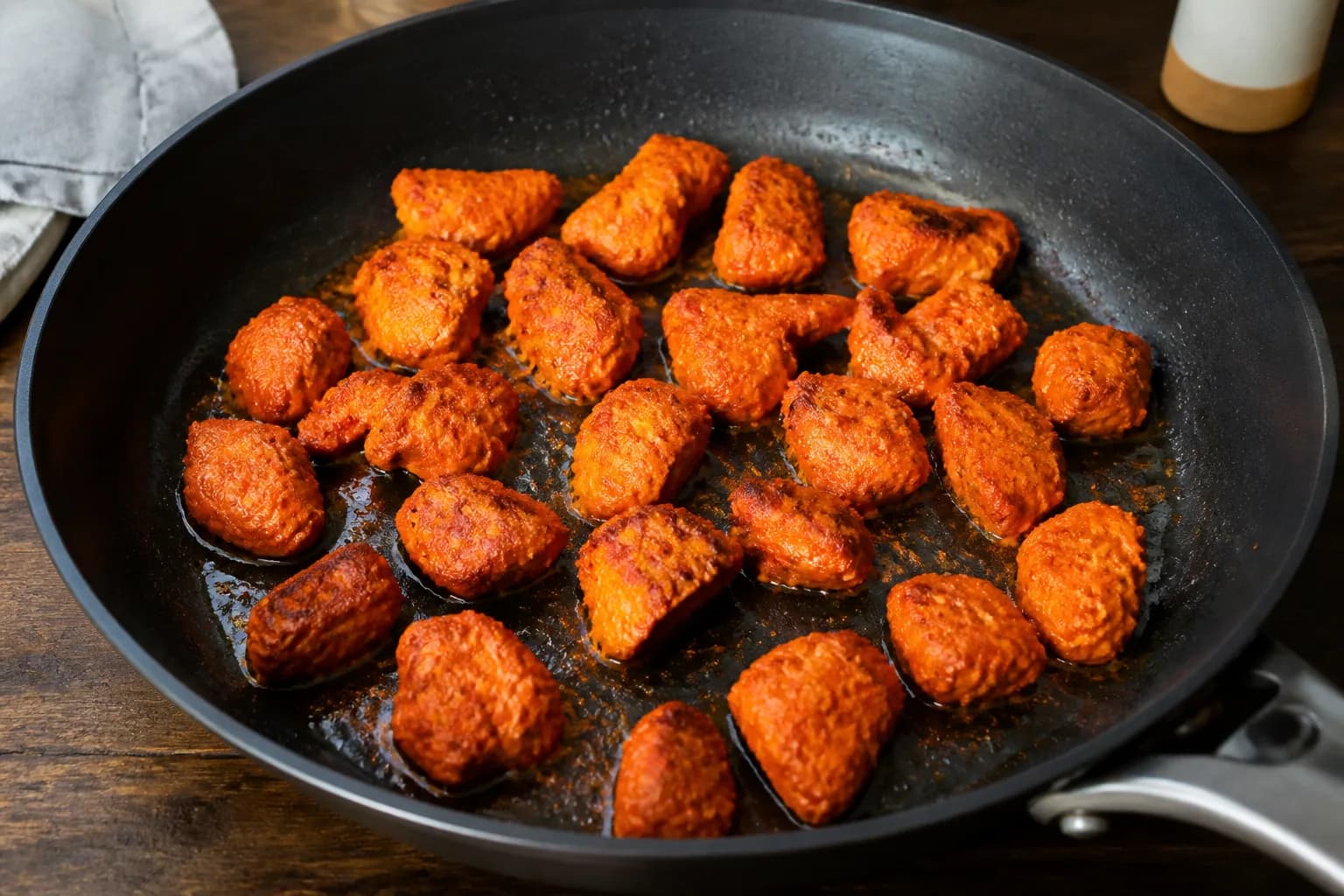
4Meanwhile, place the chicken in a bowl with a good glug of olive oil and the tandoori masala, then coat it well.
5Shallow-fry the chicken with the remaining butter and a dash of oil over a medium-high heat for about 10 minutes, until it is starting to cook evenly.
6Transfer the chicken into the sauce, stir well and leave on a low simmer for 20 minutes. Add a little water if the sauce becomes too thick.
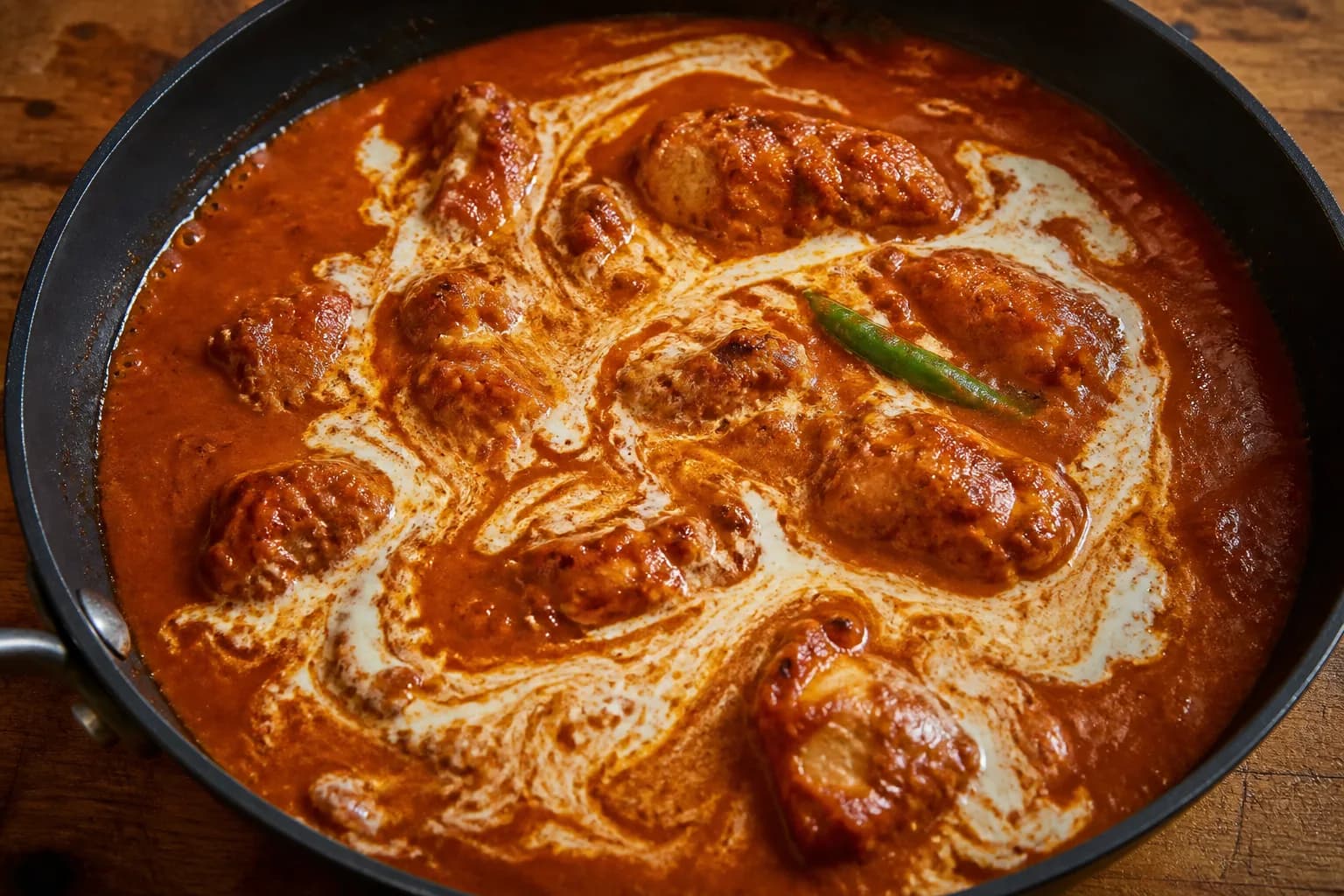
7Just before serving, stir in the double cream. Add it to taste: the more cream you use, the milder the spice and the paler the colour.
8Garnish with chopped coriander and serve with naan or rice.
A visual guide
See the key stages
Key moments to look for as you cook. Use these visual cues alongside the written method.
Step 3
Reduce the sauce uncovered
Let the passata simmer briskly without a lid so steam can escape. It should become noticeably thicker and deeper in colour.
Step 5
Cook the chicken separately
Give the coated chicken space in the pan. Shallow-fry it until the pieces are cooking evenly before adding them to the sauce.
Step 7
Finish with cream
Stir the cream through just before serving. Pale ribbons show the moment the sauce turns silkier and the chilli heat begins to soften.
Cook's notes & swaps
A little help from the OPR kitchen
These are optional pointers for making the recipe your own while keeping the spirit of the original.
Tandoori masala
This is a ready-made Indian spice blend. If you cannot find it, use garam masala with a little mild paprika for warmth and colour — the flavour will be different, but still delicious.
About Degi Mirch
Degi mirch is a mild Indian red chilli powder, used mainly for its deep red colour. It is not part of Dave’s current recipe, but mild paprika plus a small pinch of cayenne is a good alternative whenever a recipe calls for it.
Choose your chilli
Finger or rocket chillies bring freshness and heat. For a gentler dish, use fewer chillies or remove them before serving.
Families who've made this
This recipe has found new tables.
A few of the people who have brought Dave's Butter Chicken into their own homes.
A
Anandana
“Turned out super delicious!”
Families who've made this
Add your place at the table.
Cooked Dave's Butter Chicken? Share a photo or a few words for the families who make it next — and you could be picked for a future OPR live cook-along. Every post is checked by OPR before it appears here.
Helpful answers
Questions about Dave's Butter Chicken
Why does Dave use passata in Butter Chicken?
Dave replaces tinned tomatoes with passata because it gives the sauce a smoother, richer texture.
How do you make the Butter Chicken sauce thicker?
Simmer the passata briskly for 20–25 minutes without a lid so the steam can escape. Use a splash guard to control the splashes without trapping moisture.
How can you make this Butter Chicken milder?
Use fewer whole chillies or remove them before serving, then add the cream to taste. More cream makes the sauce milder and paler.
What can replace tandoori masala?
The cook's notes suggest garam masala with a little mild paprika. It will taste different, but it keeps the warmth and colour of the dish.